
Medical & Healthcare
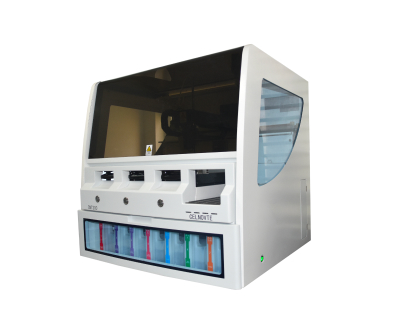
What to Consider When Buying an Automated IHC Stainer?
Technical parameters need to precisely match the detection requirements. The primary focus should be on the accuracy of the temperature control system (within ±0.3℃ of the ideal value) and the heating and cooling rate (>5℃/min). A 2024 study in Laboratory Medicine pointed out that temperature fluctuations exceeding ±1℃ would lead to false negatives in 34% of HER2 weakly expressed samples. When processing FFPE samples, the equipment must support the compatibility of antigen retrieval solutions with a pH range of 1.0 to 10.0; otherwise, the success rate of multiple staining will decrease by 28%. The Mayo Clinic case confirmed that the equipment equipped with microfluidic technology reduced the antibody consumption to 0.5μL per slice (traditional methods consume 15μL).
Flux efficiency needs to be evaluated in combination with the scale of the laboratory. The equipment with 30 slides per hour is suitable for institutions with a daily detection volume of less than 100 cases, while high-throughput models such as Leica BOND RX can handle 48 slides per hour. Johns Hopkins University's calculation shows that when the annual inspection measurement exceeds 50,000 cases, the difference in throughput causes a difference of $186,000 in labor costs. The 24/7 continuous operation design requires a reagent reserve capacity of more than 96 hours; otherwise, the shutdown for liquid replacement will result in a 15% loss of production capacity.
The reagent management system determines the operating costs. The four-zone independent refrigeration module (4±1℃) extends the validity period of reagents by 29%, while the intelligent liquid level sensing accuracy needs to reach ±0.25μL to avoid waste. The 2023 CAP survey revealed that devices lacking air displacement function waste an average of $37,000 in antibodies each year (with a volatile loss rate of 12%). The top-grade automated IHC stainer adopts a piezoelectric valve distribution system, and the cross-contamination rate is controlled at < 0.001% (the industry average is 0.6%).
A safety and compliance system is indispensable. The failure rate of ISO 13485-certified equipment is less than 0.12 times per thousand hours, and it must comply with the CLSI GP17-A2 biosafety standard. The FDA warning incident shows that devices without HEPA filters have led to 15% of laboratories being exposed to the carcinogen DAB aerosol (concentration 0.08ppm, 1.6 times the standard). Electrical safety must comply with IEC 61010-1, with a grounding impedance of less than 0.1Ω and a protection level of IP54 or above.
 The intelligent diagnostic function enhances the value of detection. In the application of the AI prediction module at MD Anderson Cancer Center, the error rate of Ki-67 counting was reduced from 9.3% manually to 2.1%, and the demand for section re-examination was decreased by 73%. Devices that support two-way communication with LIS have reduced the report issuance time to 23 minutes (42 minutes for manual input), meeting the real-time quality control requirements of ISO 15189.
The full-cycle cost needs to take into account hidden expenditures. The purchase price of high-end equipment is 150,000 to 250,000, but the five-year maintenance cost can reach 45% of the purchase cost. Data from Massachusetts General Hospital shows that the median downtime for maintenance of modular design equipment is 2.7 hours, while that of integral structures is 18 hours. The Johnson & Johnson equipment recall case in 2025 serves as a warning: the average annual cost of repairing second-hand equipment exceeds $84,000, and the risk of sample loss due to downtime increases by 12 times.
Service response speed affects business continuity. The contract should clearly stipulate a 4-hour technical response and 48-hour on-site support, and the reserve rate of replacement spare parts should be over 90%. Tests at the Cleveland Clinic showed that the average repair time (MTTR) for equipment without an SLA agreement reached 142 hours, resulting in a 19% loss in quarterly inspection volume. The start-up compliance time (TAT) is a key indicator. High-quality suppliers offer 21 days of on-site training, which increases the independent operation speed of operators by 400%.
The intelligent diagnostic function enhances the value of detection. In the application of the AI prediction module at MD Anderson Cancer Center, the error rate of Ki-67 counting was reduced from 9.3% manually to 2.1%, and the demand for section re-examination was decreased by 73%. Devices that support two-way communication with LIS have reduced the report issuance time to 23 minutes (42 minutes for manual input), meeting the real-time quality control requirements of ISO 15189.
The full-cycle cost needs to take into account hidden expenditures. The purchase price of high-end equipment is 150,000 to 250,000, but the five-year maintenance cost can reach 45% of the purchase cost. Data from Massachusetts General Hospital shows that the median downtime for maintenance of modular design equipment is 2.7 hours, while that of integral structures is 18 hours. The Johnson & Johnson equipment recall case in 2025 serves as a warning: the average annual cost of repairing second-hand equipment exceeds $84,000, and the risk of sample loss due to downtime increases by 12 times.
Service response speed affects business continuity. The contract should clearly stipulate a 4-hour technical response and 48-hour on-site support, and the reserve rate of replacement spare parts should be over 90%. Tests at the Cleveland Clinic showed that the average repair time (MTTR) for equipment without an SLA agreement reached 142 hours, resulting in a 19% loss in quarterly inspection volume. The start-up compliance time (TAT) is a key indicator. High-quality suppliers offer 21 days of on-site training, which increases the independent operation speed of operators by 400%.
The intelligent diagnostic function enhances the value of detection. In the application of the AI prediction module at MD Anderson Cancer Center, the error rate of Ki-67 counting was reduced from 9.3% manually to 2.1%, and the demand for section re-examination was decreased by 73%. Devices that support two-way communication with LIS have reduced the report issuance time to 23 minutes (42 minutes for manual input), meeting the real-time quality control requirements of ISO 15189.
The full-cycle cost needs to take into account hidden expenditures. The purchase price of high-end equipment is 150,000 to 250,000, but the five-year maintenance cost can reach 45% of the purchase cost. Data from Massachusetts General Hospital shows that the median downtime for maintenance of modular design equipment is 2.7 hours, while that of integral structures is 18 hours. The Johnson & Johnson equipment recall case in 2025 serves as a warning: the average annual cost of repairing second-hand equipment exceeds $84,000, and the risk of sample loss due to downtime increases by 12 times.
Service response speed affects business continuity. The contract should clearly stipulate a 4-hour technical response and 48-hour on-site support, and the reserve rate of replacement spare parts should be over 90%. Tests at the Cleveland Clinic showed that the average repair time (MTTR) for equipment without an SLA agreement reached 142 hours, resulting in a 19% loss in quarterly inspection volume. The start-up compliance time (TAT) is a key indicator. High-quality suppliers offer 21 days of on-site training, which increases the independent operation speed of operators by 400%.