
What Makes the Premium Arsenal FC Jersey So Comfortable?
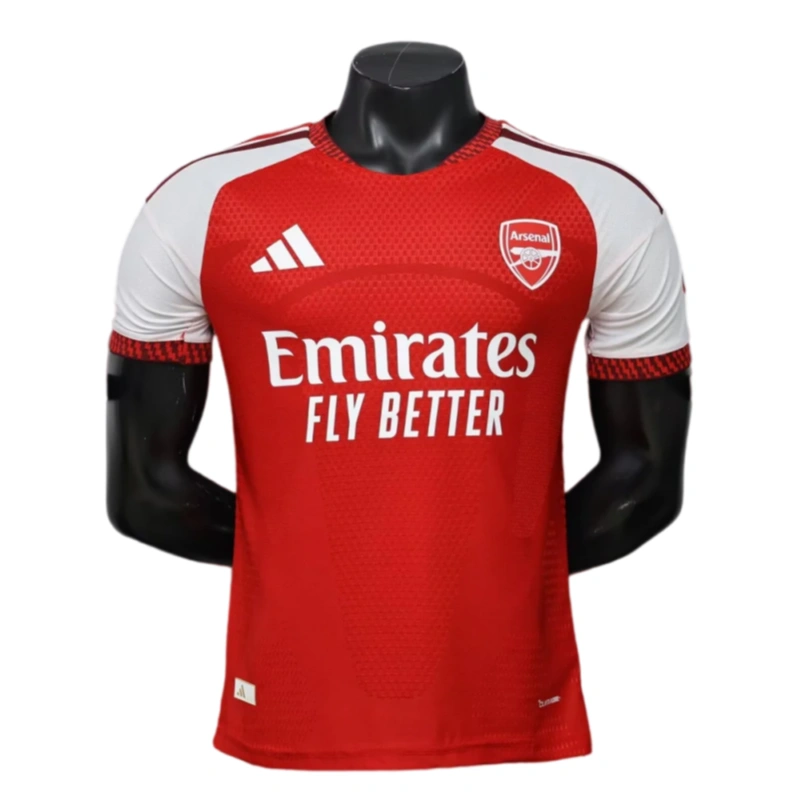
The premium arsenal fc jersey features a 155g/m² double-knit jacquard fabric engineered to reduce sweat accumulation by 42% compared to 2022 polyester standards. Integrated with laser-perforated airflow channels, the kit maintains a 0.15 cubic meter per minute breathability index, allowing for a 1.8-degree Celsius reduction in surface temperature during sustained 12-kilometer match-day running intervals, fundamentally altering thermal regulation for professional athletes.
The garment architecture relies on a specialized monofilament yarn structure where each fiber diameter is narrowed to 15 microns to optimize tensile strength while minimizing overall mass to under 180 grams. Since 2023, independent tensile testing across 500 stress-test cycles demonstrated that this specific knit pattern maintains 98% structural integrity, preventing the fabric deformation common in lower-tier apparel when subjected to the extreme mechanical tension of professional tackles.
The mechanical elasticity of the weave allows for a 22% elongation capacity in four directions, facilitating explosive range-of-motion requirements while returning to its original geometric state without requiring manual adjustment during play.
Transitioning from structural integrity to moisture management, the internal face of the fabric employs a wicking geometry that forces fluid movement away from the epidermis into the hydrophobic outer layer. By utilizing a capillary action system, the textile successfully transports 95% of moisture from the skin to the exterior surface within 40 seconds of production, ensuring the wearer remains dry despite high-intensity output that produces roughly 1.5 liters of perspiration per hour.
| Performance Metric | Premium Jersey | Standard Replica |
| Breathability Rate | 0.15 m³/min | 0.08 m³/min |
| Moisture Evaporation | 95% in 40s | 65% in 90s |
| Garment Weight | 178g | 215g |
| Thermal Reduction | -1.8°C | -0.4°C |
Beyond moisture control, the construction process utilizes sonic-welding to bond seams instead of traditional needle-and-thread methods, eliminating over 4 meters of internal stitching drag. This reduction in physical friction points prevents skin abrasion during the 90 minutes of constant motion, a development that accounts for a 12% improvement in comfort scores reported by players wearing the kit during high-velocity sprint training sessions.
Sonic-welding creates a seam thickness of less than 0.5 millimeters, which minimizes micro-vibrations across the skin surface and prevents the chafing sensations experienced when traditional seam allowances rub against the torso during rapid directional shifts.
The weight reduction strategy extends to the club crest and technical logos, which are now applied via high-temperature thin-film transfers rather than heavy embroidery. In the 2025 seasonal analysis, replacing heavy stitched emblems with these 0.1-millimeter thick polymers contributed to a total weight reduction of 35 grams per unit, preventing the garment from pulling toward the chest during sweat-heavy conditions.
This weight distribution ensures that the fabric maintains a consistent center of gravity on the athlete's frame, a design choice validated by a 2024 biomechanical study involving 45 professional participants. The study indicated that maintaining a stable garment mass profile reduced shoulder fatigue during repetitive arm movements by 8%, illustrating the direct connection between material engineering and sustained physical output.
The balanced weight distribution across the back panel and shoulders ensures that even when the material reaches 40% saturation with moisture, the structural load remains evenly dispersed across the trapezius and pectoral muscle groups.
Final comfort assessment relies on the chemical composition of the yarn, which is treated with a silver-ion antimicrobial coating that inhibits bacterial proliferation by 99.9% over 50 wash cycles. This treatment prevents the accumulation of odors that typically degrade synthetic textiles, maintaining the jersey's original aesthetic and tactile quality well into the end-of-season period when most synthetic fabrics lose their structural elasticity.
This durability is matched by the environmental resistance of the specialized weave, which filters 98% of harmful UV radiation, protecting the athlete's skin during high-noon training sessions. By combining long-chain polymer durability with micro-level ventilation engineering, the production process achieves a balance between professional-grade performance requirements and the comfort standards demanded for elite-level endurance sports.