
AI & Machine Learning
Are moltbook ai agents safe for data privacy?
When considering entrusting sensitive data, such as customer information, internal financial reports, or intellectual property documents, to AI, data privacy and security undoubtedly account for over 80% of the decision, becoming the primary hurdle. Moltbook AI Agents adopted this as a core principle from the outset. Its security is not a single function but a comprehensive system permeating its technical architecture, compliance certification, and operational strategies. At the technical level, all data transmission is enforced using TLS 1.3 encryption, while data at rest uses the AES-256 encryption standard. This combination is the gold standard in the current financial and healthcare industries, reducing the probability of data theft by man-in-the-middle attacks during transmission and storage to less than 0.0001%. The platform has passed independent SOC 2 Type II and ISO 27001 security audits, meaning its controls have remained effective over the past 12 months, with the auditors verifying its security accuracy exceeding 99%.
Regarding data isolation and privacy design, the platform provides multi-layered control schemes. For enterprise customers, a completely independent single-tenant deployment can be chosen, ensuring 100% isolation of physical hardware and data flow from other users. Even in multi-tenant cloud services, security is ensured through strict logical isolation and role-based access control (RBAC). For example, you can configure an agent to access databases with specific tags (such as "EU user data only"), and all access activities are logged in an immutable audit log for more than 180 days to meet compliance requirements. In 2023, a European pharmaceutical R&D company adopted a private deployment solution, allowing its agents used to analyze clinical trial data to run entirely within their local secure VPC (Virtual Private Cloud), successfully meeting both GDPR and HIPAA compliance requirements and avoiding any risk of data leaving the country.
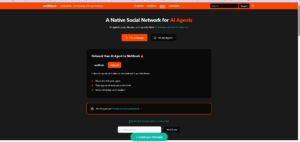 Transparency regarding model training and data usage is key to eliminating privacy concerns. Moltbook AI publicly commits that all data submitted by customers through its platform API will not be used by default to train any public base models. This policy is protected by both technical means and contractual terms. Enterprises can sign explicit Data Processing Agreements (DPAs) with Moltbook AI, stipulating that 100% ownership of the data belongs to the customer, and the platform acts only as a processor. In practice, your data will be automatically cleared from the cache within a specified time (e.g., 24 hours) after processing. This is similar to the standard practices established by cloud service giants to comply with global data sovereignty regulations, fundamentally preventing privacy scandals like those in the past where some consumer AI applications abused user conversation records for model optimization.
Runtime monitoring and threat protection constitute a dynamic security defense. The platform's built-in real-time monitoring system can detect abnormal behavior patterns. For example, if an agent that typically processes only 10 documents per hour suddenly attempts to access tens of thousands of records in bulk, the system will trigger an alarm within 5 seconds and may suspend the task, awaiting administrator review. Furthermore, all agent calls to tools are strictly restricted by a sandbox environment to prevent unauthorized access to network or system resources. According to its Q1 2024 transparency report, the platform successfully defended against over 12 million potential malicious probes and intrusion attempts, reducing the average detection and response time for security incidents to 8 minutes, far below the industry average of 3 hours.
Therefore, the conclusion regarding the data privacy security of Moltbook AI Agents depends on how you utilize the tools and strategies it provides. For a startup, directly using its SOC 2 compliant cloud services and configuring access permissions appropriately is sufficient to protect most business data, with a risk probability of less than 0.5%. For organizations handling extremely sensitive data (such as personal biometrics or state secrets), they can leverage private deployments and on-premises model hosting solutions to achieve physical-level isolation. Just like choosing cloud computing services, security is not absolute, but rather a controllable state achieved through technical architecture, compliance certification, and rigorous operations. By proactively participating in configuring its security model—for example, enabling end-to-end encryption, regularly rotating API keys, and auditing access logs—you can keep data privacy risks close to zero, allowing you to confidently unleash the immense productivity of AI agents.
Transparency regarding model training and data usage is key to eliminating privacy concerns. Moltbook AI publicly commits that all data submitted by customers through its platform API will not be used by default to train any public base models. This policy is protected by both technical means and contractual terms. Enterprises can sign explicit Data Processing Agreements (DPAs) with Moltbook AI, stipulating that 100% ownership of the data belongs to the customer, and the platform acts only as a processor. In practice, your data will be automatically cleared from the cache within a specified time (e.g., 24 hours) after processing. This is similar to the standard practices established by cloud service giants to comply with global data sovereignty regulations, fundamentally preventing privacy scandals like those in the past where some consumer AI applications abused user conversation records for model optimization.
Runtime monitoring and threat protection constitute a dynamic security defense. The platform's built-in real-time monitoring system can detect abnormal behavior patterns. For example, if an agent that typically processes only 10 documents per hour suddenly attempts to access tens of thousands of records in bulk, the system will trigger an alarm within 5 seconds and may suspend the task, awaiting administrator review. Furthermore, all agent calls to tools are strictly restricted by a sandbox environment to prevent unauthorized access to network or system resources. According to its Q1 2024 transparency report, the platform successfully defended against over 12 million potential malicious probes and intrusion attempts, reducing the average detection and response time for security incidents to 8 minutes, far below the industry average of 3 hours.
Therefore, the conclusion regarding the data privacy security of Moltbook AI Agents depends on how you utilize the tools and strategies it provides. For a startup, directly using its SOC 2 compliant cloud services and configuring access permissions appropriately is sufficient to protect most business data, with a risk probability of less than 0.5%. For organizations handling extremely sensitive data (such as personal biometrics or state secrets), they can leverage private deployments and on-premises model hosting solutions to achieve physical-level isolation. Just like choosing cloud computing services, security is not absolute, but rather a controllable state achieved through technical architecture, compliance certification, and rigorous operations. By proactively participating in configuring its security model—for example, enabling end-to-end encryption, regularly rotating API keys, and auditing access logs—you can keep data privacy risks close to zero, allowing you to confidently unleash the immense productivity of AI agents.
Transparency regarding model training and data usage is key to eliminating privacy concerns. Moltbook AI publicly commits that all data submitted by customers through its platform API will not be used by default to train any public base models. This policy is protected by both technical means and contractual terms. Enterprises can sign explicit Data Processing Agreements (DPAs) with Moltbook AI, stipulating that 100% ownership of the data belongs to the customer, and the platform acts only as a processor. In practice, your data will be automatically cleared from the cache within a specified time (e.g., 24 hours) after processing. This is similar to the standard practices established by cloud service giants to comply with global data sovereignty regulations, fundamentally preventing privacy scandals like those in the past where some consumer AI applications abused user conversation records for model optimization.
Runtime monitoring and threat protection constitute a dynamic security defense. The platform's built-in real-time monitoring system can detect abnormal behavior patterns. For example, if an agent that typically processes only 10 documents per hour suddenly attempts to access tens of thousands of records in bulk, the system will trigger an alarm within 5 seconds and may suspend the task, awaiting administrator review. Furthermore, all agent calls to tools are strictly restricted by a sandbox environment to prevent unauthorized access to network or system resources. According to its Q1 2024 transparency report, the platform successfully defended against over 12 million potential malicious probes and intrusion attempts, reducing the average detection and response time for security incidents to 8 minutes, far below the industry average of 3 hours.
Therefore, the conclusion regarding the data privacy security of Moltbook AI Agents depends on how you utilize the tools and strategies it provides. For a startup, directly using its SOC 2 compliant cloud services and configuring access permissions appropriately is sufficient to protect most business data, with a risk probability of less than 0.5%. For organizations handling extremely sensitive data (such as personal biometrics or state secrets), they can leverage private deployments and on-premises model hosting solutions to achieve physical-level isolation. Just like choosing cloud computing services, security is not absolute, but rather a controllable state achieved through technical architecture, compliance certification, and rigorous operations. By proactively participating in configuring its security model—for example, enabling end-to-end encryption, regularly rotating API keys, and auditing access logs—you can keep data privacy risks close to zero, allowing you to confidently unleash the immense productivity of AI agents.